
Kutch Initiative× Dastkar
Craft and Livelihood initiative | 1990-1996
About the Project
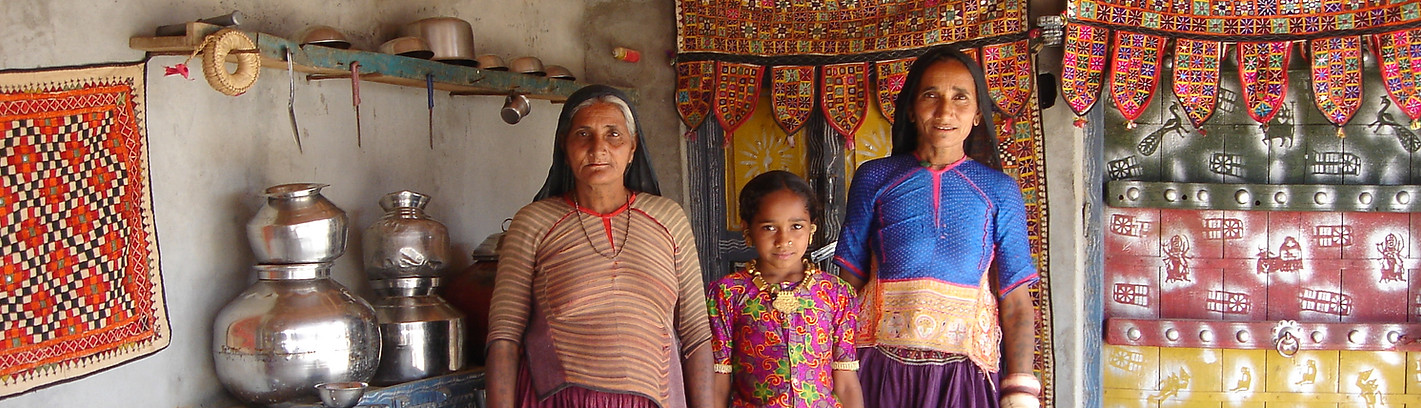
The DASTKAR Kutch Initiative began in 1990, when researcher Judy Frater approached DASTKAR to develop viable products and markets around the traditional embroidery skills of women in Kutch. In 1991, Laila Tyabji visited Kutch and began working with women across several villages.
The project focused on adapting traditional embroidery for urban markets while strengthening skills in design, quality, costing, pricing and production. Women were involved collectively in the process, with bazaars and exhibitions becoming important spaces for learning about markets and building confidence as producers.
By 1995–96, sales from the Rabari and Pako components had reached almost ₹6 lakh, nearly double the previous year's sales. The project had also become financially self-sustaining, with its 25% product markup covering administrative costs.


Crafts & Communities
The project worked primarily with three communities:
-
Rabari women: Practised traditional mirrorwork embroidery. The group developed its product range, quality and market understanding, with women earning approximately ₹500–600 per month by the fifth year.
-
Maru Meghwal women of Sumrasar: Practised Suf and Kharak embroidery using counted-thread techniques. The group developed into an autonomous enterprise, with sales averaging almost ₹1 lakh per DASTKAR exhibition.
-
Sodha Rajput women of Moti Chher: Practised Pako embroidery using double-chain stitch and mirrors. The group faced challenges around organisation, market demand and accessibility. DASTKAR subsequently explored the use of tanka running stitch for fabric yardage and garments.
Impact
The project created alternative income opportunities while strengthening women’s market knowledge, financial literacy, collective organisation and confidence. Women began maintaining their own records of payments and earnings, participating in bazaars, understanding pricing and negotiating work arrangements that allowed them to balance agricultural labour with embroidery.
As they travelled to markets and interacted with other craftspeople, their understanding of the value of their work grew. The women of Sumrasar eventually formed an independent, autonomous group, while local leadership and responsibility also grew within the other groups. Perhaps most significantly, the women increasingly began to see themselves as equal partners rather than beneficiaries. The project demonstrated that craft could serve not only as a source of income, but also as a means of strengthening agency, confidence, cultural identity and independence.